
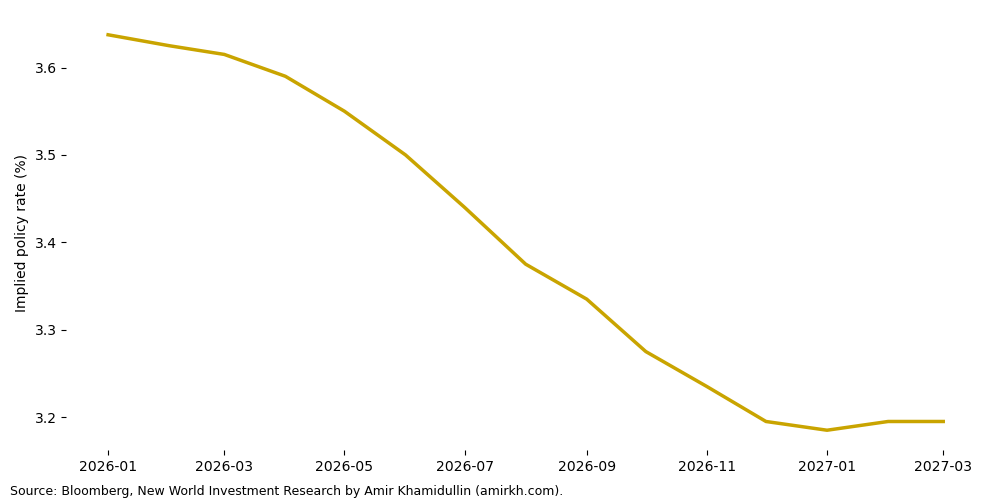
Federal Fund Futures imply further easing in monetary policy in 2026, with the expected policy rate flattening around 3.2% by early 2027.
Analysts set the r-star, which is the neutral level of interest rate that neither stimulates nor restricts economic activity, to be around 3.7%. It means that if the actual interest rate is below r-star, then the monetary policy is accommodative. This implies that policy rates priced by the market would remain accommodative relative to r-star, even after the projected easing cycle.
The lagged effects of tariffs, reduced migration, an expansionary fiscal policy stance, and tight credit spreads are exerting pressure on the US inflation rate to remain significantly above the 2% target. PIIE expects inflation to rise above 4% in 2026.
Taken together, the data points to a macroeconomic landscape in the US where further easing by the Fed is at risk of supporting a higher increase in prices, hurting low-income households the most (with the US economy already being extremely K-shaped), while the outlook for economic growth is unclear.
#inflation #FED
 New World Investment Research
Leave a comment