
Foreign investors withdrew their capital from emerging markets debt, which supported the asset class.
Many EMs experienced increased demand for bonds issued in domestic currencies from local investors. This is because local investors are more willing to hold bonds that are less prone to FX risks to enjoy lower volatility. As per the chart, Indonesia, along with other peers, saw about a 25% decline in global ownership of its bonds. This should’ve dragged the bond prices down, but the opposite occurred. Due to interest rate cuts and the transfer of around $12 billion from Bank Indonesia to state-owned banks, bonds have rallied.
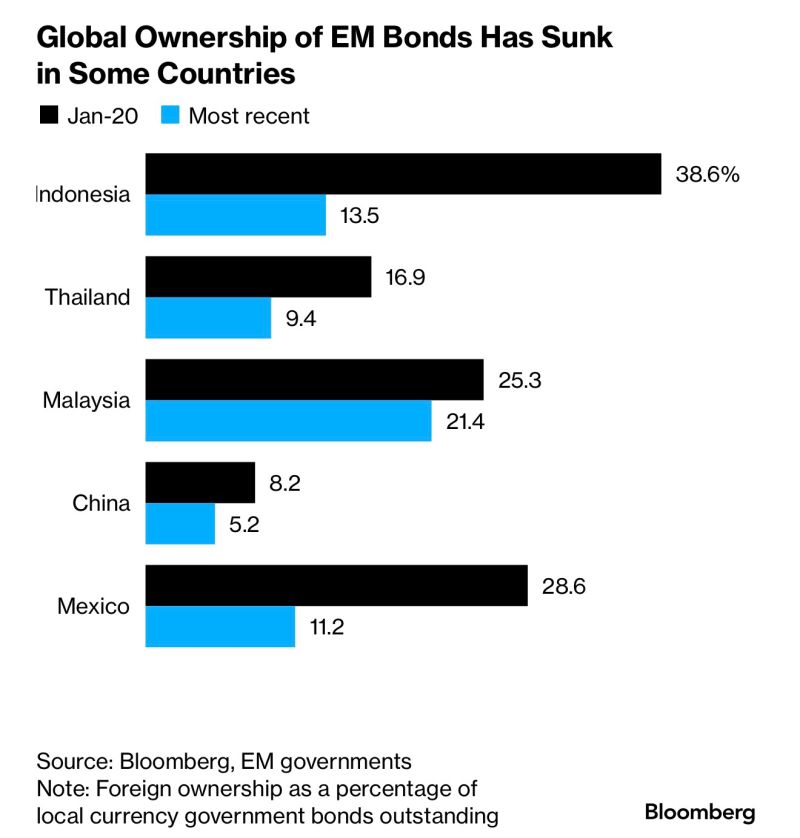
EM bonds tend to be less volatile than developed market ones. The yield change for the Bloomberg emerging-market bond index has a standard deviation of just 0.02 over the past 12 months, versus 0.04 for the corresponding gauge of developed-nation debt.
This signals gradual maturity of EM markets and increased demand from local investors. Emerging markets debt might continue to provide higher returns in 2026, but we should watch closer for macroeconomic indicators.
 New World Investment Research
Leave a comment